



Oxytocin Receptor Antagonist
- 1
- 2
-
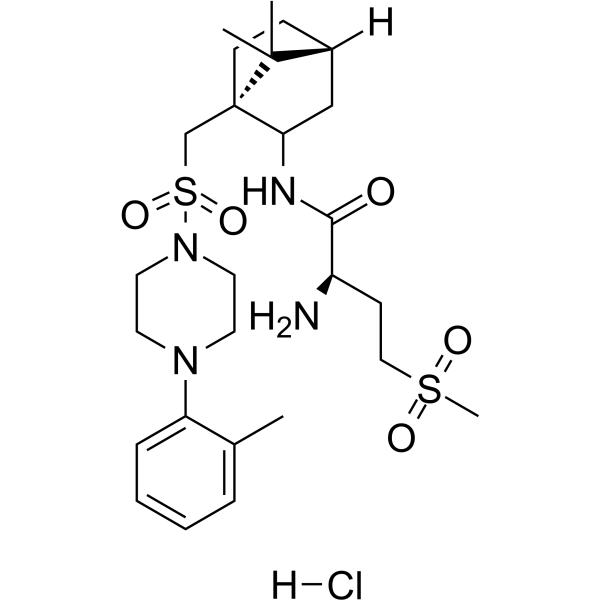
L-368,899 hydrochloride
 0 Images
L-368,899 hydrochloride is a potent, selective, orally bioavailable, non-peptide oxytocin receptor antagonist, with IC50s of 8.9 nM and 26 nM for rat uterus and human uterus oxytocin receptor, respectively. L-368,899 hydrochloride used as a tocolytic agent.
-
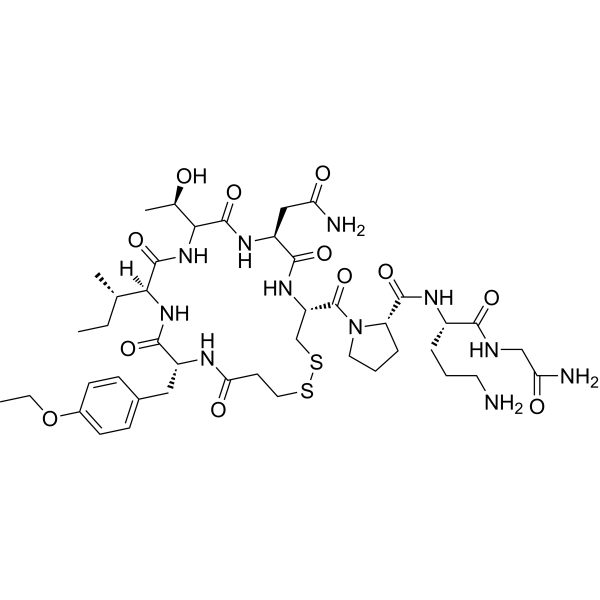
Atosiban
 0 ImagesSynonyms: RW22164; RWJ22164
Atosiban (RW22164; RWJ22164) is a nonapeptide competitive vasopressin/oxytocin receptor antagonist, and is a desamino-oxytocin analogue. Atosiban is the main tocolytic agent and has the potential for spontaneous preterm labor research.
-
Atosiban-d5 TFA
 0 ImagesCat. No.: HY-17572SSynonyms: RW22164-d5 TFA; RWJ22164-d5 TFA
Atosiban-d5 TFA (RW22164-d5 TFA) is the deuterium labeled Atosiban TFA. Atosiban (RW22164; RWJ22164) is a nonapeptide competitive vasopressin/oxytocin receptor antagonist, and is a desamino-oxytocin analogue. Atosiban is the main tocolytic agent and has the potential for spontaneous preterm labor research.
-
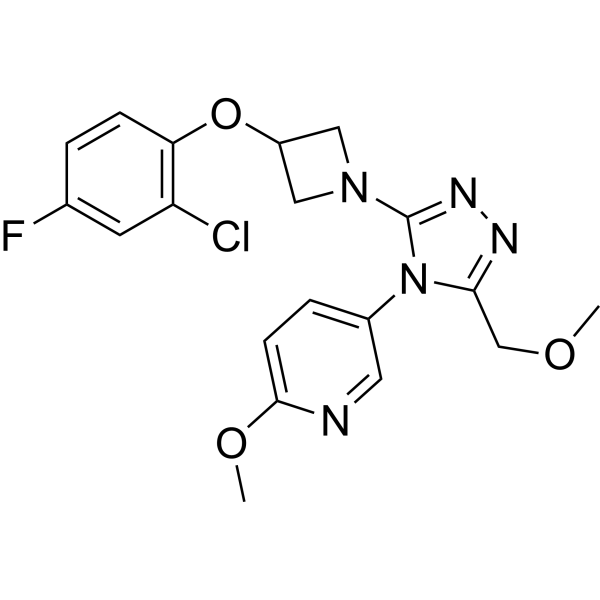
Cligosiban
 0 ImagesSynonyms: PF-3274167
Cligosiban (PF-3274167) is an orally active, highly selective, and centrally permeable oxytocin receptor antagonist with good pharmacokinetics in rats and can inhibit physiological ejaculation in rodents[1][2].
-
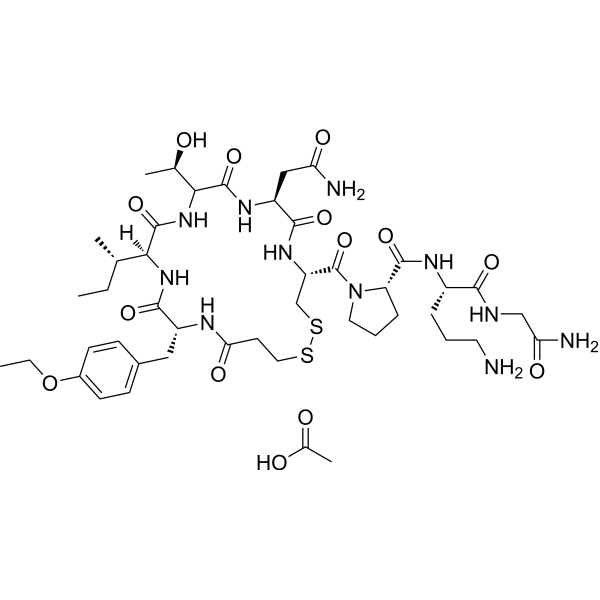
Atosiban acetate
 0 ImagesSynonyms: RW22164 acetate; RWJ22164 acetate
Atosiban acetate (RW22164 acetate;RWJ22164 acetate) is a nonapeptide competitive vasopressin/oxytocin receptor antagonist, and is a desamino-oxytocin analogue. Atosiban is the main tocolytic agent and has the potential for spontaneous preterm labor research.
-
L-371,257
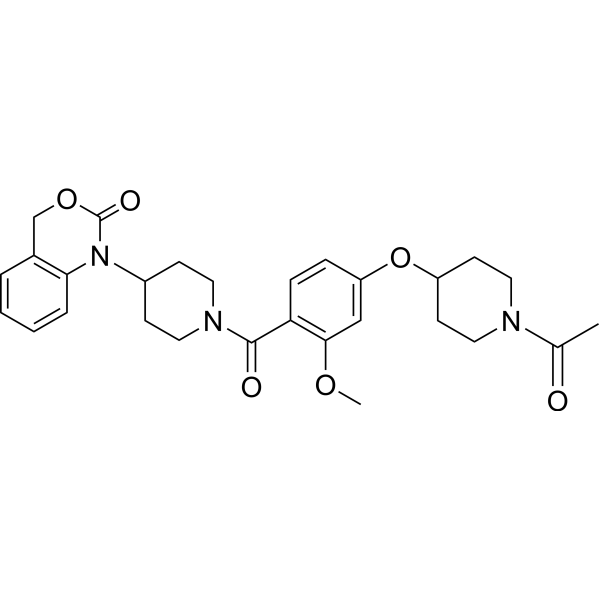 0 Images
L-371,257 is an orally bioavailable, non-blood-brain barrier penetrant, selective and competitive antagonist of oxytocin receptor (pA2=8.4) with high affinity at both the oxytocin receptor (Ki=19 nM) and vasopressin V1a receptor (Ki=3.7 nM).
-
Retosiban
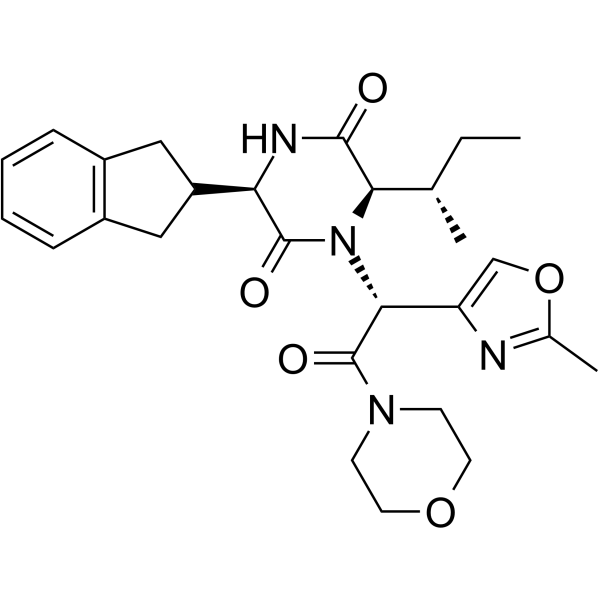 0 ImagesSynonyms: GSK 221149; GSK 221149A
Retosiban (GSK221149A) is a potent, selective, and orally active oxytocin receptor antagonist (Ki (hOT) = 0.65 nM, Ki (rOT) = 4.1 nM) with no detectable agonist activity. Retosiban has nanomolar affinity for the oxytocin receptor with >1400-fold selectivity over the closely related vasopressin receptors. Retosiban inhibits spontaneous and induces uterine contractions. Retosiban can be studied in research for preterm labour.
-
5β-Dihydroprogesterone
 0 ImagesSynonyms: 5βDHP
5β-Dihydroprogesterone (5βDHP) is the metabolite of Progesterone (HY-N0437). 5β-Dihydroprogesterone binds to oxytocin receptor, reduces the Oxytocin (HY-17571)-induced calcium signal transduction, thereby exhibiting the tocolytic activity.
-
SHR1653
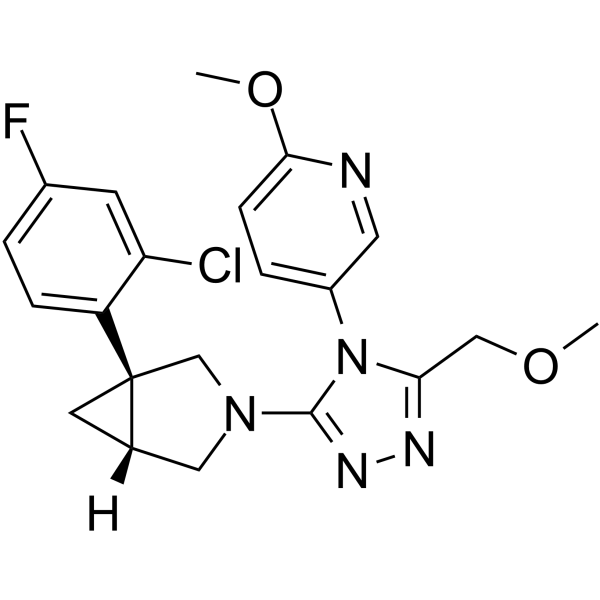 0 Images
SHR1653 is a highly potent, selective and brain penetrated oxytocin receptor (OTR) antagonist, with an IC50 of 15 nM for hOTR.
-
L-372662
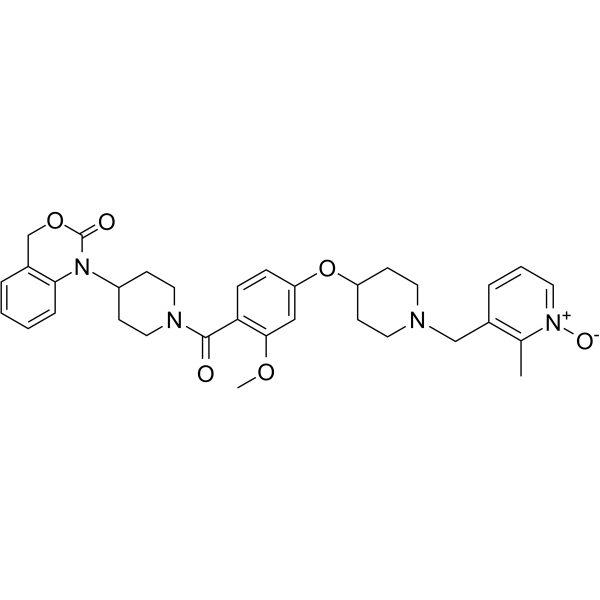 0 Images
L-372662 is a potent and orally active non-peptide oxytocin antagonist with a Ki value of 4.8. The Kd value of L-372662 for wild-type hOTR and [A318G]OTR is 5.8 nM and 73 nM. L-372662 shows selectivity to OTR:V1aR.
-
OT-R antagonist 1
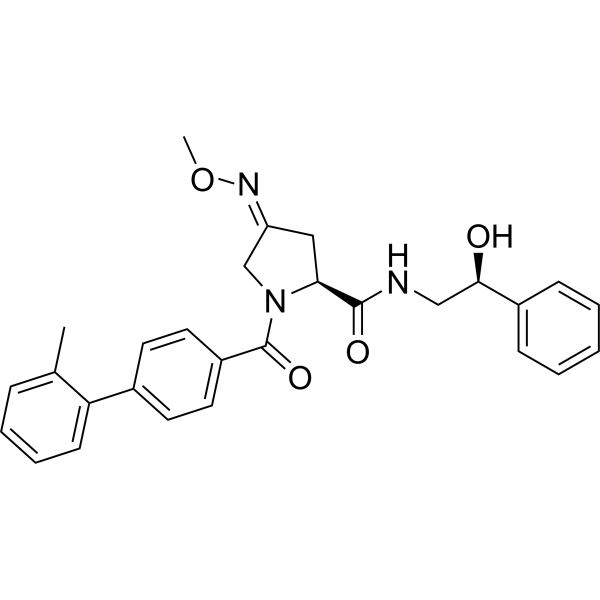 0 ImagesCat. No.: HY-15015CAS No.: 364071-17-0Synonyms: Oxytocin receptor antagonist 1
OT-R antagonist 1 is a new potent and selective nonpeptide low molecular weight OT-R antagonist.
-
OT-R antagonist 2
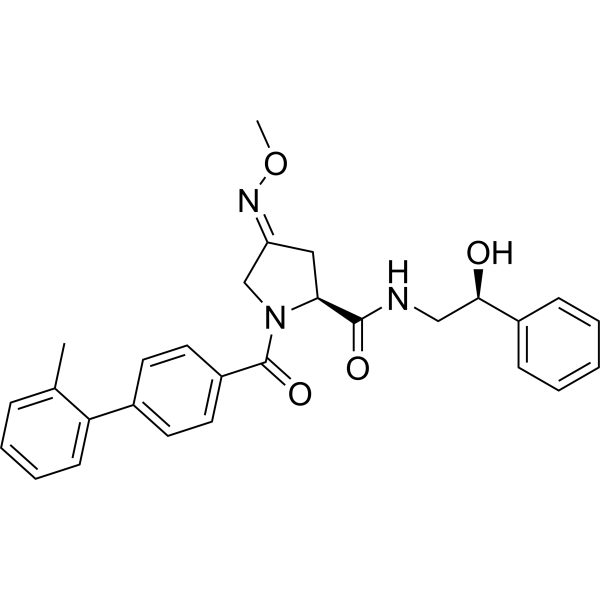 0 ImagesSynonyms: Oxytocin receptor antagonist 2
OT-R antagonist 2 is a nonpeptide low molecular weight OT-R antagonist.
-
(d(CH2)51,Tyr(Me)2,Orn8)-Oxytocin
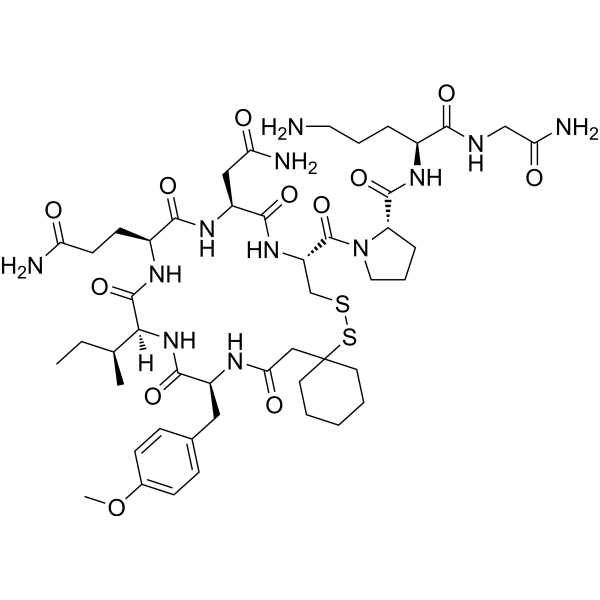 0 Images
(d(CH2)51,Tyr(Me)2,Orn8)-Oxytocin (OVT) is an oxytocin receptor antagonist. (d(CH2)51,Tyr(Me)2,Orn8)-Oxytocin can be used for the research of neurological disease.
-
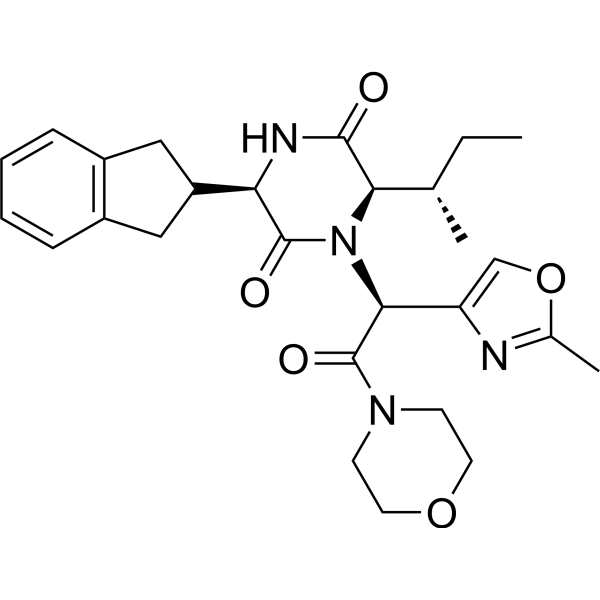
Epelsiban
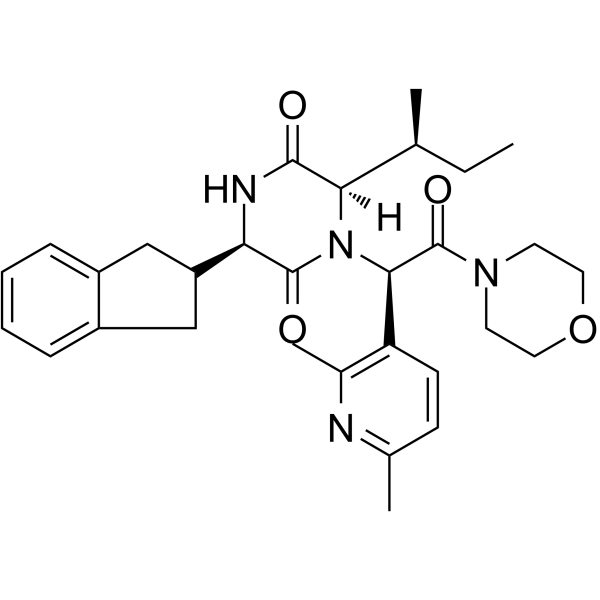 0 ImagesCat. No.: HY-105018CAS No.: 872599-83-2Synonyms: GSK 557296
Epelsiban (GSK 557296) is a potent, selective and orally bioavailable oxytocin receptor antagonist, with a pKi of 9.9 for human oxytocin receptor.
-
L 366509
 0 ImagesCat. No.: HY-15007CAS No.: 138382-23-7
L 366509 is a spiroindenylpiperidine camphorsulfonamide oxytocin (OT) antagonist. Modifications led to a new series of o-tolylpiperazine (TP) camphorsulfonamides, exhibiting high affinity for OT receptors and selectivity over arginine vasopressin receptors. Notably, compound 7 (L-368,899) showed excellent OT receptor affinity, potency in inhibiting OT-stimulated uterine contractions, good aqueous solubility, and oral bioavailability in multiple species. Compound 7 has entered clinical testing as an oral and intravenous tocolytic agent. Molecular modeling suggests the TP camphorsulfonamide structure mimics the D-AA2-Ile3 dipeptide, crucial in potent OT antagonists.
-
Erlosiban
 0 ImagesCat. No.: HY-16741CAS No.: 1477482-19-1Synonyms: OBE001
Erlosiban (OBE001) is an orally active non-peptide type oxytocin receptor antagonist. Erlosiban inhibits the increase of intracellular calcium concentration, thereby reducing uterine smooth muscle contraction. Erlosiban can be used for research on premature birth and to improve embryo implantation and pregnancy rate in assisted reproductive technology (AR).
-
OT antagonist 3
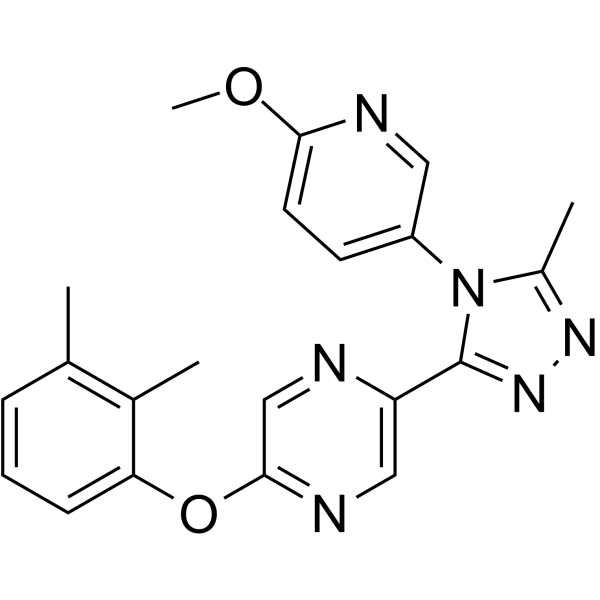 0 ImagesCat. No.: HY-103649CAS No.: 925703-75-9
OT antagonist 3 is an oxytocin (OT) antagonist extracted from patent WO2007017752A1.
-
Barusiban
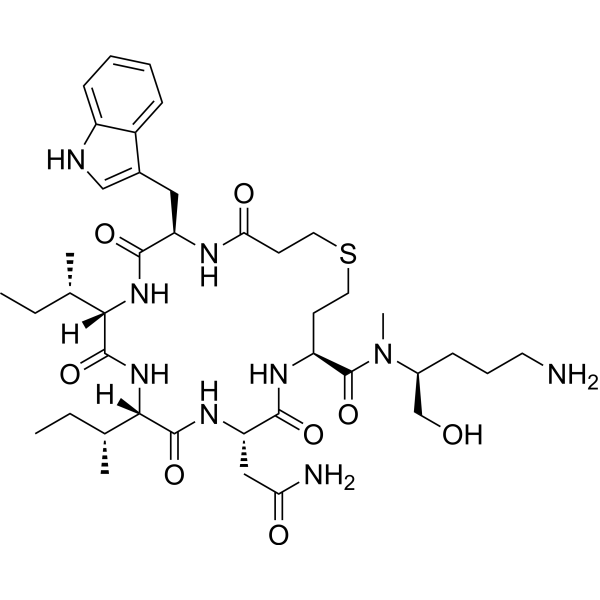 0 ImagesCat. No.: HY-P3516CAS No.: 285571-64-4Synonyms: FE-200440
Barusiban (FE-200440) is an oxytocin receptor (OT-R) antagonist (Ki=0.8 nM), inhibits OT-induced contraction. Barusiban can be used in preterm labor (PTL), in vitro fertilisation (IVF) and infertility research.
-
OT antagonist 3 analog
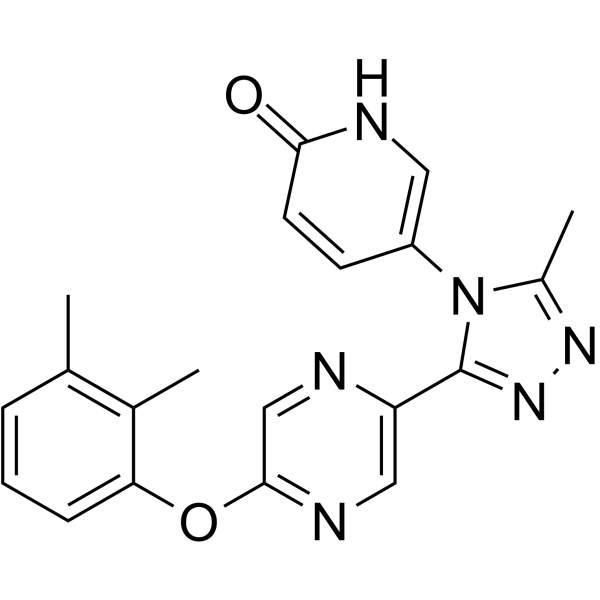 0 ImagesCat. No.: HY-103652CAS No.: 2444044-37-3
OT antagonist 3 analog is an analog of OT antagonist 3.
- 1
- 2



